Menu Close
Scottish Land Fund image

Funders

Scottish Land Fund imageThe Scottish Land Fund (SLF) is a Scottish Government Fund which  supports rural and urban communities to become more resilient and sustainable through the ownership and management of land and assets. If you are a community based organisation with an interest in acquiring an asset then you may be eligbile to apply to SLF for funds to develop your project ideas and buy your asset.  Contact the National Lottery Community Fund for Scotland  for more information.

Tel: 0141 846 0447

Email:advicescotland@tnlcommunityfund.org.uk

National Lottery Community Fund


Every year the National Lottery Community Fund in Scotland  distributes millions of pounds of the National Lottery’s good cause money to community groups and charitable projects around the UK.  Contact if you are interested in applying for any of the funds administered by them in Scotland. 

Tel: 0141 846 0447

Email: advicescotland@tnlcommunityfund.org.uk

UK Government Logo

The Community Ownership Fund is a £150 Million fund, from the Department for Levelling Up, Housing and Communities (DLUHC), exists to help local communities across the UK to take control of assets, amenities or facilities that are at risk of closure – from parks to pubs, lidos to libraries. Up to £250k to purchase or lease a local asset or to help pay for refurbishments. It is open until March 2025.

Further information and enquiries through the MyCommunity website. 

Justifying the discount

Benefits of Asset Transfer

The Scottish Government Guidance on Asset Transfer states:

“When the price offered in an asset transfer request is less than the market value of the property, the relevant authority will need to consider whether the proposed benefits to be delivered by the community transfer body justify the proposed discount (which will be accounted for as a “gift”)

“The benefits of the request should be proportionate to the value of the asset and the level of discount, with an appropriate level of information to support the application”

 The relevant authority will be looking for two main types of benefit in your ATR to justify any discount you have requested. 

1. Financial savings to the public sector as a result of your proposal

Your ATR should provide details of the financial impact of your proposal, these could include:

  • Direct financial savings to the relevant authority such as: no longer having to maintain the asset, pay for future capital costs (major repairs) or other running costs of the building.
  • Savings made by the public sector as a result of your activities – i.e. if your project aims to reduce re-offending amongst former prisoners, that will bring about a saving to the Scottish Prison service or if you are running services which help older people remain in their own homes, that will bring about a saving to the local authority, who would otherwise have to pay the costs of their care. 

2. Level of community benefits

It is important to show the benefits you will deliver as part of your proposal. These could include contribution towards local or national priorities such as: improved standards of healthcare, contribution towards alleviating homelessness, supporting local employment, tackling poverty or protecting the environment.

The Scottish Government Guidance on assessing asset transfer requests sets out the areas that relevant authorities need to take into account when considering Asset Transfer Requests. It can be helpful to use these as headings when describing the benefits you will deliver in the Asset Transfer Request form. 

  • Economic development
  • Regeneration
  • Public health
  • Social wellbeing
  • Environmental wellbeing
  • Reducing inequalities of outcome from socio-economic disadvantage
  • Any other benefits that might arise through the alternative use of the asset

Linking your outcomes to national and local strategies will show how your project will contribute to these priorities.

  • The National Performance Framework (NPF)
  • Local Outcome Improvement Plans and Locality Plans – available from your local authority website
  • Other strategies – Mental Health, Environmental, Arts & Culture, Heritage…

Read through these documents and make direct connections between your proposal and the outcomes in the strategy i.e. “Our baby and toddler service will help meet the NPF outcome ‘Our children grow up loved, safe and respected so they realise their full potential’ by providing a supportive and nurturing environment for young children”

Detailing ‘softer’ outcomes is important as well, benefits such as: the improvement in local wellbeing from developing local green spaces; the increase in participation from a marginalised group or groups, improved community cohesion, pride in the community and intergenerational activity are all important benefits even if they are harder to quantify. 

You may find using the Outcomes Matrix useful for considering the range of outcomes your project could deliver. 

Scottish Government Guidance – Assessing ATR

These are the areas that the Scottish Government Guidance recomends that relevant authorities should consider when assessing an asset transfer request, bear them in mind when writing your ATR. 

a) Value to relevant authority in existing use

  • feasibility and cost of relocation of services elsewhere
  • potential revenue savings arising from transfer

b) Value for alternative use/redevelopment

c) Value for proposed and other community purposes

d) Level of community benefits

  • extent of community served.
  • nature of benefits to be delivered.
  • links to relevant authority’s corporate priorities and outcomes.
  • community need/demand for the services.

e) Likelihood that benefits will be delivered over a 5-year period

  • strength of organisation.
  • sustainability of business plan/project.
  • sources and level of funding support.

f) Impact of project failure

  • to surrounding local environment.
  • to reputation of the parties.
  • to the service users/relevant authority’s objectives.

Benefits of community ownership

Before you start, it is helpful to know the benefits of community ownership and the factors that will give you success.

Having ownership of an asset in your community can help you:

1. Deliver Social & Economic Purpose, because it:

  • Protects key local services / facilities that may otherwise be lost.
  • Provides a physical base for provision of local services.
  • Allows generation of income that can be re-invested locally.
  • Provides jobs, training and business opportunities.
  • Can reverse economic decline of an area and attract investment.
  • Enables more intensive use of assets and services when control is closer to the community.
  • Allows better stewardship of local assets because the community owns and uses them.
  • Allows groups to make major alterations / extend / re-furbish (usually the ability to carry out such works is limited in a lease).

2. Change Attitudes and Relationships, because it:

  • Gives the group credibility with funders / other stakeholders.
  • Heightens the group’s profile and improves perceptions of it.
  • Instils a renewed sense of pride and confidence in the community.
  • Provides local people with a meaningful stake in the future development of the place in which they live and / or work.
  • Can increase participation – membership, volunteering, attendance at meetings.
  • Encourages, through its success, further ideas and activity – ripple effect!.

3. Move towards financial self-sufficiency, because:

  • The organisation can generate income from the asset.
  • Ownership avoids rent payments / increases.
  • There is incentive to invest in building to reduce running costs – e.g. energy efficiency.
  • It creates equity – gives the potential of selling the building and using the funding to meet other priorities.
  • It gives your balance sheet strength – which you can use as security.

4. Build organisational sustainability through:

  • Independence / control over future of asset allowing you to make long-term plans.
  • Leverage, enabling you to negotiate further investment.
  • The development of skills and capacity locally that taking on and managing a building encourages.
  • Attracting new people with additional skills.
  • Building long-term support from community.

What you will need

The Legal Requirements

It is sensible to use the Asset Transfer Request Form provided by the relevant authority, as this will help you submit all the required information. However, it is not a requirement that you do so. If you choose not to use the provided form, see the Content of an Asset Transfer Request section of this site for further details of the information you must provide.

Additional Documents

In addition to your Asset Transfer Request Form, you may need to submit the following documents as part of your request:

  • Your organisation’s constitution, articles of association or registered rules (required).
  • Any maps, drawings or a description of the land requested.
  • Evidence of community support – i.e. letters from organisations and community surveys.

Although it is not a requirement of the Community Empowerment Act, many public bodies will also ask for organisations to submit a Business Plan as part of their Asset Transfer Request,

The Business Plan should be developed alongside your Asset Transfer Request Form as it will help populate this important document. Ensuring your Business Plan has everything you need for your Asset Transfer Request Form will ensure you don’t duplicate effort.

How to complete your Asset Transfer Request

Although you can submit the information above and have your Asset Transfer Request be compliant with the legal requirements, submitting minimal information is unlikely to be enough to have your asset transfer request approved. Relevant authorities will require more information about your organisation, your plans, the support from your community, the benefits you will deliver and the finances behind the project.

Most relevant authorities will use some kind of assessment matrix to score your Asset Transfer Request and determine whether or not to approve it. Ask your contact at the relevant authority for a copy of the matrix, so you can understand their priorities and the information you will need to provide.

How much information and detail you provide in your Asset Transfer Request should be proportionate to the scale of your project. A simple transfer of ownership for an asset which you have been leasing for a number of years should not require a highly detailed request. However, if you are taking on a large project, an asset with historical significance or a building delivering important services you should be prepared to provide detailed and robust plans to the relevant authority.

The Scottish Government provides a model Asset Transfer Request Form and most relevant authorities use this or an adapted version. These are the main sections and the information you will need to provide.

  1. Community Proposal
  2. Benefits of the proposal
  3. Capacity to deliver
  4. Level and nature of support
  5. Funding

Community Proposal

This is where you say why you want to take on this asset, your project objectives and any changes you plan to make.

  • Start by providing a bit of background about what the needs and aspirations are in your community, the problems and issues, but also the strengths you can build on.
  • Outline your main objectives for the asset and set out a clear vision of where you want to get to.
  • Set out all the activities you plan to deliver using the asset.
  • Set out timescales and stages as part of a project plan – when you will start delivering activities, if you are having refurbishment work done outline when will you expect that be complete. Be realistic and build in extra time for delays.
  • If you considered other options for different sites or alternative ways of acheiving your objectives, set out the reasons why you chose this asset as the best option.

Benefits of the proposal

This section is where you outline the benefits your proposal will have for the community. Please refer to the Demonstrating Best Value and Justifying the Discount sections on the left for further details of how to complete this section.

The Scottish Government Guidance on assessing asset transfer requests sets out the types of benefits that relevant authorities need to take into account when considering Asset Transfer Requests. It can be helpful to use these as headings when describing the benefits you will deliver in the form.

  • Economic development
  • Regeneration
  • Public health
  • Social wellbeing
  • Environmental wellbeing
  • Reducing inequalities of outcome from socio-economic disadvantage
  • Any other benefits that might arise through the alternative use of the asset

Capacity to deliver

This section is about demonstrating you have the capacity to deliver the project you have outlined and the benefits. Capacity includes skills, experience, resources and time.

  • Outline your governance structure – what type of legal structure, charitable status, number of people on your board, how often you meet, any sub-committees, what policies you have in place etc.
  • Outline the skills you have on your board and those you have access to in your wider membership and community. A short bio of each board member with their skills and experience is helpful. Highlight skills relevant to the asset transfer such as finance, project management and facilities management.
  • Provide details of past projects you have completed succesfully as an organisation – if you are a new group then refer to the experience you have from previous voluntary roles, work and personal lives.
  • Show clearly who is going to be responsible for each part of the project and how as a board you are going to oversee the asset transfer. If you have used or plan to use professional advisors, give details of the type of advice they will provide.

Level and Nature of Support

This section gives you an opportunity to show support for the project from your community.

  • Indicate the types of work you carried out to gather views from the community – surveys, social media activity, workshops, interviews and petitions.
  • Provide headline figures from any enaggement work you have undertaken to gauge support and gather ideas. The full reports can be submitted as additional documents
  • Indicate any letters of support you have from individuals and organisations. The letters themselves can be submitted as additional documents
  • If you have identified any groups or individuals who may be negatively impacted by the asset transfer, set-out here how you have engaged with them and how you will work to reduce any negative impact.

Funding

In this section you need to provide details of how you plan to fund the asset transfer, the resulting project and create a sustainable business model.

  • Provide details of capital funding that will be required for the transfer itself and any additional works you plan to have undertaken. Detail where you intend to source that funding – trusts and foundations, donations, own funds etc. It is not expected to have all the funding secured, but an indication of eligibility and early discussions having taken place is advisable
  • Provide details of how you will manage to run the asset in a financially sustainable way once transferred. A forecast of income and expenditure is advisible. If you are not sure of running costs, ask the relevant authority for what their operating costs have been.


Demonstrating Best Value

Any Asset Transfer Request submitted under the Community Empowerment (Scotland) Act 2015 will be assessed by the relevant authority that owns that asset, alongside any other proposals for the related asset to enable a Best Value judgement to be made. This will be a judgment that takes into account the financial implications alongside the wider benefits that will accrue in pursuing local or national priorities to deliver improved outcomes for Scotland.

Public bodies are often asked to assess proposals and implement plans based on the social value or best value of a service. This is difficult when much of what they do is driven by financial constraints.  

  • All relevant authorities have a duty to secure Best Value in their operations, including when disposing of or letting property.
  • Best Value does not always mean the highest possible price.
  • Public bodies can sell, or lease, at less than market value where there are wider public benefits to be gained from a transaction.
  • Delivery of Best Value is considered across the public sector as a whole.

When completing an Asset Transfer Request communities should take into consideration and address all of the relevant points for each of the 7 criteria in the the guidance notes from the Scottish Government.

Best Value Theme Summary Information Required

Vision and Leadership

An organisation will have in place a clear vision and plan for what it will do to contribute to the delivery of improved outcomes for Scotland. This may be linked to one or more local or national priorities e.g. the Scottish Government’s National Outcomes. A clear plan for achieving the intended outcomes, ideally showing links to local or national priorities. Members of the community transfer body would also show that they have the relevant skills and experience to deliver the intended objectives.

Effective Partnerships

An organisation will show how it, and its partnerships, provides a collaborative approach to the challenges that communities face. The detail of any partnerships in place to help ensure successful delivery of the intended benefits. Community support is vital and can be shown through a variety of metrics such as surveys, consultations or ballots.

Governance and Accountability

An organisation will be able to demonstrate structures, policies and leadership behaviours that support the application of good standards of governance and accountability. An outline to illustrate that the appropriate structures and policies are in place to help ensure success in the longer-term.

Use of Resources

An organisation will show how its effective management of all resources (including staff, assets, and information) is contributing to the delivery of specific outcomes, highlighted in the national outcomes. Explain how the body’s current and future resources will be used as part of a medium to long term plan (5-10 years). This could include the numbers of employees or volunteers and the maintenance of any asset. This could also include the funding requirements of the group and the sources of funding already in place.
Performance Management An organisation will ensure that robust arrangements are in place to monitor the achievement of its desired outcomes as well as any reporting arrangements. Outline the way in which a community transfer body will be able to monitor the achievement of its objectives, whether that be recording volunteers time or the amount of benefit achieved as part of the overarching vision. To demonstrate openness and transparency it will be important to report performance to the community.
Sustainability An organisation will demonstrate an effective use of resources in the short-term and an informed prioritisation of the use of resources in the longer-term in order to contribute to sustainable development. The goal of Sustainable Development is to enable all people throughout the world to satisfy their basic needs and enjoy a better quality of life without compromising the quality of life of future generations.

There are five broad principles of sustainability:

  • promoting good governance;
  • living within environmental limits;
  • achieving a sustainable economy;
  • ensuring a stronger healthier society; and
  • using sound science responsibly.

A community transfer body could demonstrate how its future funding or self-financing arrangements are to be achieved. Any proposal could also include any positive impact on the natural environment.

Equality An organisation will demonstrate that consideration of equality issues is embedded in its vision and strategic direction and throughout all of its work. The community transfer body should establish that the different groups within the community have had their different needs taken into account. Any request should include where a proposal may be reducing inequalities of outcome from socio-economic disadvantage.

Top tips for your ATR

Read the guidance

The Scottish Government guidance is vital reading when preparing your asset transfer request. Chapters eight, ten and thirteen have the most relevant information.

  • Chapter eight tells you what you must include and how to make an ATR.
  • Chapter ten tells you about the decision making process and the things the public body will take into account.
  • Chapter thirteen tells you how the public body assesses the request and the criteria they will use to determine whether your ATR is successful.
  • Some public bodies have their own guidance which may have additional information you should also consider.
  • Many public bodies will use a Scoring Matrix to determine ATRs. Ask the public body for a copy of the template, so you can ensure you are covering all the areas you will be scored on.

Gather as much information as you can

The viability of your project is often dependent on knowing as much about the asset as possible prior to submitting an ATR. Getting this information early will save any nasty surprises later in the process.

  • Ask the public body for information on the running costs of the asset – utilities, rates, insurance etc.
  • Request to see any surveys, condition reports or maintenance schedules so you can determine the likely costs of renovations or future repairs.
  • Ask for information on any access rights or legal burdens attached to the asset.

Outline a clear vision

Ensure that the reader of the ATR is made aware of what you hope to achieve as early as possible.

  • The first part of your project proposal should set-out a clear vision for the project.
  • In one or two paragraphs, outline a succinct statement of the impact you will have on your community.

Think about your audience

The Asset Transfer Request will be used to inform a report which is likely to make a recommendation on whether to approve your ATR.

  • Think about the things that are important to the officers writing the report and the various departments within the organisation who will have an interest – Property, Legal, Finance, Community. Try to anticipate the questions they will have and have answers available in your ATR.
  • If it goes to a committee of councillors or an independent board, what are their priorities and concerns likely to be and how can your project address them?

Be strategic

It is important to see your asset transfer as part of a broader strategy, both locally and nationally. You should show how it fits in with local plans and the work of other organisations. This doesn’t mean changing what you plan to do, just showing how it contributes to already established plans.

  • Always link the benefits you are going to deliver with priorities for public bodies (especially the one your ATR request goes to!) – look at local plans, other strategies, and the National Performance Framework.
  • Look at any sector specific plans i.e. if your project involves sport, how does it link in with national strategies for sport. If there are objectives in these strategies that you contribute towards, be explicit in saying so.

Don’t sell yourself short

Include everything that is relevant in the form, you can’t expect the public body to know about something you haven’t included.

  • Public bodies want reassurance that the project will be successful, so don’t be shy about highlighting your achievements so far and the skills and experience in your organisation. If you are a newly established organisation, then focus on your board/steering group and the skills they bring from their personal and professional lives.
  • Describe your governance arrangements in detail and mechanisms you have in place to ensure accountability. If you haven’t got systems in place yet, describe how and when you will do so.

Make a plan

It is important to say in a reasonable level of detail what you want to achieve, and how you will get there.

  • Use SMART objectives when describing what your aims are – Specific, Measurable, Achievable, Realistic, Timebound
  • Include a project plan with a timeline, key stages and the activities you will undertake.
  • Ensure your plan fits with the timescales for the Asset Transfer process and funders deadlines.
  • Make sure you’ve considered all the resources you will need for the project – technical help, financial resources, volunteer time.

Don’t ignore the negative consequences

All projects have negative aspects, risks or challenges. If you ignore them in your ATR, it suggests you haven’t considered the project carefully enough.

  • Show you’ve identified and assessed any risks and then say how you will reduce their impacts.
  • Outline any negative consequences and be honest about who will be affected. Show that you have considered those affected and any actions you will take which may lessen those impacts.

Focus on the benefits

The benefits you will deliver in your community are essential to the success of your ATR. Particularly if you are seeking a discount from the public body, as you will need to justify that discount through the benefits you will deliver.

  • Calculate and outline financial benefits to the public body where possible – this could be in the form of direct financial savings (reduced operating costs) through to more indirect savings from the impacts you will have – reduced pressure on their services.
  • Calculating the financial contribution made by your volunteers is a straightforward way of showing financial benefits – volunteer hours per year * Living Wage.
  • Capture all the benefits your project will deliver – think carefully about the activities you are planning and what the full impact of those will be on the community. i.e. if you are running a lunch club for older people – it will have impact on reducing isolation, improving mental health, improving physical health and will save the public sector money by reducing pressure on the NHS and council care services.

Gather political support

 A well-written ATR is important, but if you have community councillors, councillors, MSPs, MPs, civil servants and local leaders behind your ATR, it stands a far greater chance of success. Calling, writing to and briefing politicians and officers will increase the support for your request and get people lobbying on your behalf.


Understanding Scottish Places

The Understanding Scottish Places platform was commissioned by the Scottish Government. It offers a mechanism for understanding the similarity of places across Scotland. Deliberately designed to avoid a simplistic ranking of places as better or worse, USP focuses on the shared characteristics of towns.

The platform is formed of three parts. The first two elements have been created using national data sets – a new typology of Scottish towns, and an assessment of towns’ inter-relationships. The third part of the platform is the USP Your Town Audit, which is designed to help users gather local information which complements the national data available through USP.

The tool is useful when looking at demographics, deprivation index, employment rates etc. and can help you to compare against similar sized communities across the rest of Scotland. This information supports arguments for change demonstrating the needs in your community.

National Standards of Community Engagement

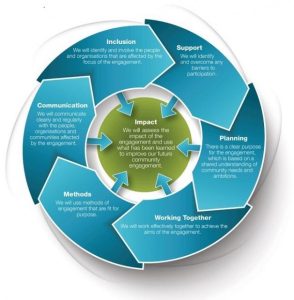
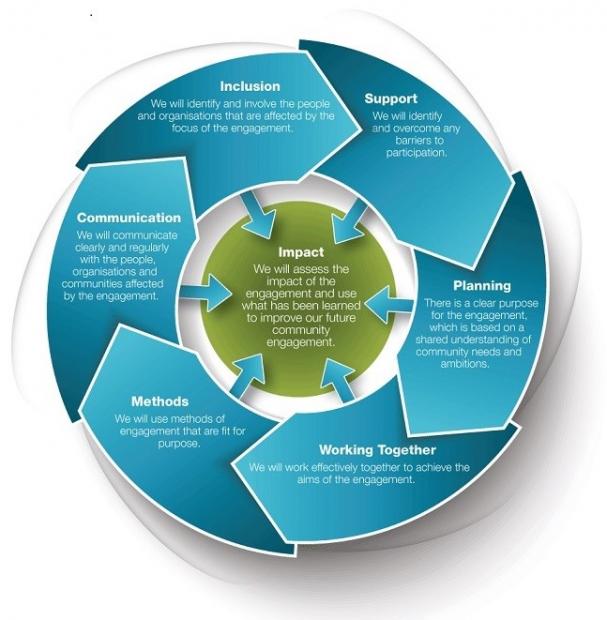
The National Standards for Community Engagement are good-practice principles designed to support and inform the process of community engagement, and improve what happens as a result.

They were originally launched in 2005 and since then they have been used to support community engagement, and user involvement, in Scotland in areas such as community planning and health and social care. They have been widely accepted by a range of practitioners as key principles for effective practice.

During 2015/2016, the National Standards for Community Engagement were reviewed and updated. The aim of this review was to reflect the developing policy and legislation relating to community empowerment in Scotland, and to build on the growing range of practice.

The review process was very inclusive and drew on contributions from a wide range of community organisations, third sector (voluntary) organisations and public sector bodies.

The 7 National Standards for Community Engagement

Each of the National Standards for Community Engagement includes a short headline statement, a set of indicators to show progress towards meeting each standard.

The following terms are used throughout the National Standards for Community Engagement.

  • ‘We’ refers to the leaders or organisers of the community engagement process.
  • ‘Partners’ are any organisation or group who is involved in planning or delivering the community engagement process.
  • ‘Participants’ are all of the people or groups who are actively involved at any level throughout the community engagement process.
  • ‘Community’ is a group of people united by at least one common characteristic, including geography, identity or shared interests.


Living Streets Scotland

This project is about creating a walking nation, free from congested roads and pollution, reducing the risk of preventable illness and social isolation and making walking the natural choice. Living Streets Scotland believe that getting Scotland walking means progress for everyone.

They work with professionals and politicians to make sure every community can enjoy vibrant streets and public spaces. Their Walk to School and Walk to Work campaigns reach every area of Scotland. Through the Walkable Communities project, they empower community groups to deliver improvements to their walking environment.

They assist communities to look at the way things are and identify opportunities for change.


Greenspace Scotland

This is a process used primarily for outdoor spaces rather than for whole neighbourhoods. Other tools might be more appropriate for whole neighbourhoods unless looking only at the outdoor spaces between buildings.

It is based on the premise that successful places are characterised by lively, secure and distinctive public spaces that function for the people who use them. It involves working with the people who live in and/or use a particular place, in order to discover their needs and aspirations. This information is then used to create an agreed place vision and action plan which focuses on people and function rather than design-led solutions.

The Greenspace Scotland process involves systematic observations, interviews, surveys and place evaluation workshops with local communities and their partners. There is an emphasis on making both short term, often low cost, and long term changes. The place vision can evolve quickly into an implementation strategy, beginning with small scale, do-able improvements that can immediately bring benefits to places and the people who use them.

The process encourages a unique sense of community ownership and stakeholder support, enabling those with a diverse range of interests to identify and achieve a common purpose for the benefit of all.  It can yield benefits far beyond making better spaces for people developing community identity, skills and capacity.

Four principles applied to the Greenspace process are;

  • Identifying problems
  • Developing the vision
  • Making it happen
  • Developing sustainable management processes


Planning for Real

Planning for Real® (PFR) is a nationally recognised community planning process based on a 3D model. The process allows residents to register their views on a range of issues, to work together to identify priorities, and in partnership with local agencies go on to develop an action plan for change.

Planning for Real is usually led by a trained practitioner to ensure that the process is followed correctly and the resulting plan fit for purpose.  

Place Standard

The Place Standard tool provides a simple framework to structure conversations about place. It allows you to think about the physical elements of a place (e.g. its buildings, spaces, and transport links) as well as the social aspects (e.g. whether people feel they have a say in decision making).

The tool provides prompts for discussions, allowing you to consider all the elements of place in a methodical way. The tool pinpoints the assets of a place as well as areas where a place could improve.

http://www.placestandard.scot/#/home


Locality Plans

As well as producing Local Outcome Improvement Plans which cover the whole local authority area the Community Planning Partnerships also have to identify smaller areas within the local authority area which experience the poorest outcomes, and prepare and publish Locality Plans to improve outcomes on agreed priorities for these communities (the outcomes prioritised for improvement in a locality plan may differ from those in the LOIP). The aim is also to ensure greater community involvement as it is often easiest for community bodies to participate in community planning at locality or neighbourhood level, where it can have most relevance to their lives and circumstances.

Each CPP will produce at least one Locality Plan and some CPPs will produce many – there is no fixed number. For example, the CPP may also choose to apply locality planning approaches to other or all neighbourhoods in their area.  This can for instance be an effective ways of involving local communities in identifying local priorities, and in shaping and delivering responses to these. Lessons learned from asset based approaches involving the local community in one locality area may provide useful insights for other localities.

There are many different ways that communities can be consulted on the LOIP and Locality Plans, but the CEA sets out a specific way that community participation can be improved. 

Part 3 of the Act Participation Requests is focused on extending and
improving community participation in improving outcomes for communities. It is the legislation that enables communities to request to participate in decisions and processes which are aimed at improving outcomes. 

Part Three – Participation Requests

A community participation body may make a request to a public service authority to permit the body to participate in an outcome improvement process. Having a Community Place Plan helps communities to be clear about what they want from services delivered by public bodies and means that they can use participation requests as part of the implementation of their plan.

Participation requests under the Community Empowerment Act, are not the only way for communities to engage and participate with public bodies. In general terms participation requests are intended to provide opportunities for communities to pro-actively be involved in improving outcomes.

As such they are designed to help groups highlight community needs and issues, and become involved in change or improvement. They are not intended to replace good quality existing community engagement or participation processes but are rather designed to complement and enhance them. Similarly, Participation Requests are not intended to be an extension of complaints procedures but should rather be viewed as an opportunity for communities to establish formal dialogue with public service authorities.

There are a range of possible uses of Participation Requests which can be broadly divided into four categories as follows:

To help people start a dialogue about something that matters to their community, through highlighting needs, issues or opportunities for improvement.

  • Example: a group of fathers/grandads have identified a lack of opportunities for support for men and their children within their local area. They are not a constituted group, but have informally come together to provide play activities for their children and have established an informal network. They have identified that there are many men living in the area who are unemployed and who care for their children/grandchildren, and that they struggle to access free or affordable play activities and support. The group want to improve access to existing parents’ groups for men locally, and to work with service providers to establish a father’s group. They have made a participation request to their health board around positive parenting.

To help people have their voice heard in policy and service development, through contributing to decision-making processes.

  • Example: A tenants’ organisation which represents a neighbourhood wishes to influence how decisions are made in relation to community safety. They have identified a community safety issue which is specific to their neighbourhood, but which they believe has not been prioritised within wider community safety planning. They feel that their voices have not been heard within the process, and have made a participation request to their local authority to be involved in community safety planning structures.

To help people to participate in the design, delivery, monitoring or review of service provision, through contributing to service change or improvement.

  • Example: A network of refugees and asylum seekers from across Scotland have carried out a survey which shows a range of experiences in relation to accessing English language courses. They wish to work with statutory providers to ensure that all refugees and asylum seekers have equal opportunity to access English language tuition, and in particular to address the issue of cost and timing/availability of transport which was reported as barrier for those living in more rural communities. They have made a participation request to a regional transport provider around equality of access to transport.
  • Example: A local Development Trust wants to take over the running of a local care service and makes a participation request to the local authority to start a dialogue on the issue. People in the community feel strongly that there is a need for such a care service to be delivered locally as it enables many older people to continue to live in their own homes.

To help people challenge decisions and seek support for alternatives which improve outcomes.

  • Example: A community development trust is seeking to challenge a decision about a woodland area which is well used by the local community for outdoor activities such as biking, walking and woodland education. The woodland is owned and managed privately and the owner has endeavoured to restrict access to the site claiming that this is due to the discovery of a protected species.  The community development trust has made a participation request to the National Park Authority to become involved in finding a suitable resolution.

The most common definitions describe participation as “the act of taking part in, or sharing in something”. The term is one which implies an active rather than a passive process and it is the intention of the Act to enable the active participation of communities in addressing the issues and opportunities which are of greatest importance to them.

When done well, the process of community engagement should lead to improved community participation so that communities can have more influence over the services and decisions that affect their lives. Some of the benefits of good community engagement and better participation include:

  • The way in which public services are planned, developed and delivered is influenced by, and responds to, community need.
  • People who find it difficult to get involved (for example, because of language barriers, disability, poverty or discrimination) help to influence the decisions that affect their lives.
  • The various strengths and assets in communities and across public and private sector agencies are used effectively to deal with the issues communities face.
  • New relationships are developed between communities and public sector bodies which build trust and make joint action possible.

The National Standards for Community Engagement are a framework for public service authorities, support organisations and community participation bodies when planning and undertaking community engagement processes.

More information on Participation Requests can be found on the relevant Scottish Government webpage.

Part Two – Community Planning

This section of the website deals with Part Two of the Act – Community Planning.

Part two of the Community Empowerment Act made significant changes to community planning legislation, previously contained in Part two of the Local Government in Scotland Act 2003. Community planning now has a clear statutory purpose focused on improving outcomes. It is explicitly about how public bodies work together and with the local community to plan for, resource and provide services which improve local outcomes in the local authority area, all with a view to reducing inequalities.

These reforms aim to recognise that:

  • It is unlikely that any public sector body can most effectively meet its own business requirements by working in isolation.
  • Public bodies need to work closely in partnership with each other and their local communities in order to make the biggest difference in the outcomes for which they are responsible.
  • How public sector bodies and communities do this should reflect often distinctive local conditions.

Community Planning Partnerships
A Community Planning Partnership (or CPP) is the name given to all those services that come together to take part in community planning. There are 32 CPPs across Scotland, one for each Local Authority area. Each CPP focuses on where partners’ collective efforts and resources can add the most value to their local communities, with particular emphasis on reducing inequality.

The 2015 Act expands the number of public sector bodies that are subject to community planning duties. These are now:
– local authority
– the Health Board
– Scottish Enterprise / Highlands and Islands Enterprise
 -Police Scotland
 -Scottish Fire and Rescue Service
 -Regional Transport Partnership
 -Historic Environment Scotland
 – Health and Social care Integration Joint Board for the area
– a National Park authority
– the board of management of a regional college
– a regional strategic body under the Further and Higher Education (Scotland) Act 200
– Scottish Environment Protection Agency
– NatureScot (formerly Scottish Natural Heritage) 
– Scottish Sports Council ( i.e. Sportscotland)
– Skills Development Scotland
 -VisitScotland

Community participation

Community participation lies at the heart of community planning, and applies in the development, design and delivery of plans as well as in their review, revision and reporting. Consultation is no longer enough – CPPs must take all reasonable steps to secure the involvement in community planning of any community body which it considers is likely to be able to contribute to it, to the extent that the community body wishes.

They must in particular have regard to community bodies which represent those communities experiencing socio-economic disadvantage. And statutory community planning partners must contribute such funds, staff and other resources as the CPP considers appropriate to secure participation of community bodies in community planning.

Whilst the provisions in the 2015 Act sets out statutory duties on CPPs and community planning partners, effective community planning requires more than simply complying with these duties. CPPs and community planning partners need to apply the principles of effective community planning summarised in this guidance, as without them community planning is unlikely to make the difference to people and communities that it can and should.

CPP plans
CPPs are responsible for producing two types of plan to describe their local priorities and planned improvements:

  • Local Outcomes Improvement Plans (LOIP), which sets out the local outcomes which the CPP will cover for improvements. 
  • Locality Plans, which cover smaller areas within the CPP area, usually focusing on areas that will benefit most from improvement. Each CPP will produce at least one Locality Plan and some CPPs will produce many – there is no fixed number. 

 Local Outcomes Improvement Plans (supported by Locality Plans) 

The CEA requires CPPs to:

  • Prepare and publish a Local Outcomes Improvement Plan (LOIP) which sets out the outcomes  which the CPP will prioritise for improvement across the entire council area. 
  • Review and report publicly on progress towards their LOIP and locality plans, and keep the continued suitability of these plans under review.

A Local Outcome Improvement plan :

  • Should set out clear and agreed priorities for improving local outcomes and on tackling inequalities, and demonstrate a robust link between these and the CPP’s understanding of local needs, circumstances and aspirations.
  • Identify those geographical communities / communities of interest that experience significantly poorer outcomes.
  • Outline how participation with communities, businesses and third sector has helped to develop and influence this understanding.

With the clear focus of the LOIPs on reducing inequality and improving outcomes for the most disadvantaged communities, LOIPs should identify those areas where CPPs will have the greatest impact.

Each local authority area has a LOIP and if you are taking on an asset it is really important you look at the plan to see what the local priorities and how your project would fit with or provide an answer for these. This will help strengthen your argument for taking ownership

More information on all aspects of Community Planning can be found on the Scottish Government CP webpage.

Legislation for Place Planning

The Planning (Scotland) Act 2019  proposes changes to how land is developed and used supporting a more inclusive and collaborative planning system. Communities will have more say in shaping the future development of their areas in a radical shake-up of planning laws.

A new right means people will now be able to prepare Local Place Plans (LPPs)  covering what will be done in their communities, including over issues such as housing, open space and community facilities as well as highlighting local priorities for business and employment opportunities.

Local Authorities will be legally required to take Local Place Plans into account when preparing their development plans.

These strategies will provide long-term direction to large scale development, matching local and national planning needs, outcomes and priorities.

Additionally, the National Planning Framework, Scotland’s long-term plan for future development, will now be required to be approved by Parliament.

Other changes covered by the Act include new powers for local authorities to introduce control areas where planning permission will always be required if owners want to change the use of their property to short-term lets.


Tayport Cafe 2

Community Action Plans

 “A healthy community is a form of living democracy: people working together to address what matters to them”.

The community action plan is one of the participatory tools used to build the capacity of community members in taking action in accordance with the problems, needs, and potential of the community. It is a road map for implementing community change and delivery of essential services by clarifying what will be done, who will do it and how it will be done. The plan describes what the community wants to achieve, what activities are required during a specified time period, what resources (money, people and materials) are needed to be successful.

A community action plan becomes a framework for implementing the activities that are decided by the community itself. The focus is more on the process of understanding and overcoming problems in order to rebuild people’s lives rather than just physical development such as building houses, providing health services or recreational facilities for example. It is important to understand that the community should be the main actors in preparing their own community action plan. Producing the action plan helps people to take realistic and concrete steps toward participatory development planning in order to improve the services important to them. By bringing everyone together to think and discuss about resources and group involvement, this tool increases awareness about the skills and resources already available in the community.

Aberdeenshire Community Action Plans


Charrettes

A Charrette is a public meeting or workshop devoted to a concerted effort to solve a problem or plan the design of something. 

Charrettes have become a popular way of consultation over the last ten years as the Scottish Government provided grant funding for the process. 

The aim of these events is to enable the community, industry and public bodies to work directly with professional designers and experts to generate a specific vision, masterplan and action plan to improve their place. The collaborative nature of charrettes allows the wider social and economic issues of the community to be considered alongside physical design issues. However, the Scottish Government recognises that the charrette approach is only one method of enabling participation in placemaking. Communities have different needs at different times and may require support not just in developing a vision for their place, but also at the stages before and after this.

While the structure of a charrette varies, depending on the design problem and the individuals in the group, charrettes often take place in multiple sessions in which the group divides into sub-groups. Each sub-group then presents its work to the full group as material for further dialogue.

Charrettes serve as a way of quickly generating a design solution while integrating the aptitudes and interests of a diverse group of people. Although the structure of charrettes may vary, the general idea of a charrette is to create an innovative atmosphere in which a diverse group of stakeholders can collaborate to “generate visions for the future”

Charrettes resulting in community place plans usually involve planning professionals, public servants and community representation.


Local Place Plans

Local Place Plans are a new type of plan giving people an opportunity to develop proposals for the development and use of land in the place where they live.

As of March 2021 we are awaiting Guidance from the Scottish Government as to how the development of Place Plans will be carried out.

The Scottish Government commissioned SCDC and Nick Wright Planning to look at the opportunities and challenges. The conclusion they came to following discussions with stakeholders were:

1.Local Place Plans should be community-led.

2.Local Place Plans should be prepared through inclusive and robust community engagement.

3.Local Place Plans should express a clear vision with key actions.

4.Local Place Plans should be co-produced and co-delivered.

5.LPPs should reflect community aspirations, and should not be limited to spatial planning.

6.The spatial elements of Local Place Plans should inform Local Development Plans.

7.Local Place Plans should be tools for community empowerment and addressing inequality.

8.Local Place Plans should be tools to help community planning and land-use planning achieve better outcomes.

9.Local Place Plans boundaries should reflect local community boundaries.

10.Local Place Plans and Community Action Plans can essentially be the same thing.

Going forward they concluded: 

To ensure Local Place Plans deliver their benefits, we need to think about:

  • Equipping local communities to prepare and deliver their own plans.
  • Ensuring local authorities are able to commit resources, time and personnel to support the delivery of Local Place Plans.
  • Making sure Local Place Plans tackle inequality by developing criteria at national and local level for how decisions about how resources are allocated. 

Planning Aid Scotland (PAS) has produced a guide intended as a helpful resource for any community group looking to prepare a Local Place Plan (LPP). The suggested approach outlined in the publication  is not intended to be prescriptive. Every effort should be made to adapt any recommendations to your local setting and needs; every place is different and so every Local Place Plan will be different.

An overarching ambition should be to take a collaborative approach, bringing together different sections and interests in your community so that your final plan will have buy-in from as many people as possible, including local businesses, landowners, developers etc. This approach is a key aspect of placemaking and the Place Principle. Working in this way will make the ambitions for your place contained within your Local Place Plan more inclusive, realistic and deliverable

Assessing the standard of places
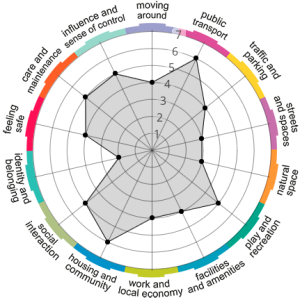
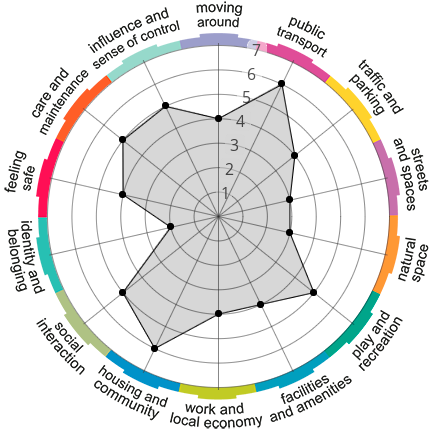
The Place Standard Assessment tool is a tool for assessing quality of place. The Place Standard provides a simple framework to structure conversations about place and focuses on social as well as physical characteristics.

Users answer 14 questions and the answers are plotted in a simple diagram which represents a qualitative evaluation of a place. The results can help to promote collaboration and stimulate conversation about how the physical and social environment can reduce inequalities around health and wellbeing.

The Place Standard has been developed in partnership between Scottish Goverment, NHS Health Scotland and Architecture & Design Scotland.
 

Placemaking

Placemaking’ is a term that is becoming increasingly used but what exactly does it mean in the context of a community?

Placemaking is a process through which places that people want to live, work, or explore are created. 

From Spaces to Places has provided a good example of what this actually means. “A simple way to look at it is to compare it to something more familiar, like the concept of homemaking. In the same way that homemaking is the process of turning a house into a home, placemaking is the process of turning a space into a place.”

You can explore some methods of placemaking in the Tools and Resources menu on the left.