

The establishment of Men’s Sheds across Scotland is increasing week by week. This fact sheet has been produced to look at some of the issues particularly affecting Men’s Sheds in the asset transfer process. These include finding funding for purchase of an asset, demonstrating wider community benefit and finding ways to “pay the bills”. It complements the extensive general information on all aspects of Community Asset Transfer (CAT) to be found on the COSS website.
Download PDF
This fact sheet has been produced to look at some of the issues particularly affecting Men’s Sheds in the asset transfer process. These include finding funding for purchase of an asset, demonstrating wider community benefit and finding ways to “pay the bills”. It complements the extensive general information on all aspects of Community Asset Transfer (CAT) to be found on our website.
(www.dtascommunityownership.org.uk)
This module is the first in a series of six which have been produced by the Community Ownership Support Service (COSS) to support the sustainable transfer of publicly-held assets into community ownership. COSS is delivered by the Development Trusts Association for Scotland and funded by the Scottish Government.
Engaging in community asset transfer involves three core elements:
- Examining the feasibility of an asset transfer
- Planning for the asset transfer
- Managing and sustaining the asset when acquired
This series of modules covers each of these areas and provides advice and guidance on making an application for asset transfer helping to ensure it is robust.
Download PDF
This module is the first in a series of six which have been produced by the Community Ownership Support Service (COSS) to support the sustainable transfer of publicly-held assets into community ownership. COSS is delivered by the Development Trusts Association for Scotland and funded by the Scottish Government.
Engaging in community asset transfer involves three core elements:
- Examining the feasibility of an asset transfer
- Planning for the asset transfer
- Managing and sustaining the asset when acquired
This series of modules covers each of these areas and provides advice and guidance on making an application for asset transfer helping to ensure it is robust.
Download PDFThe Place Standard tool provides a simple framework to structure conversations about place. It allows you to think about the physical elements of a place (for example its buildings, spaces, and transport links) as well as the social aspects (for example whether people feel they have a say in decision making).
The tool provides prompts for discussions, allowing you to consider all the elements of a place in a methodical way. The tool pinpoints the assets of a place as well as areas where a place could improve.
This module aims to provide organisations with the knowledge and practical skills required to explore the feasibility of engaging in community asset transfer. It focuses on a number of areas, including the user demand and organisational asset transfer readiness.
The core learning outcomes of this module are:
- To understand the process of asset assessment
- To gain knowledge on the factors impacting upon sustainability
- To understand the importance of proving demand and ensuring strategic fit
- To gain knowledge of the steps necessary to scope an asset and identify legal issues
- To gain knowledge of building internal capacity to match the needs of the project
- To understand how to conduct a risk analysis for the project
- To understand the key components of a feasibility study
This webinar will cover the Community Benefits Society (bencom) organisational structure. A bencom is an eligible structure for community groups seeking to make an asset transfer request and we are conscious that many will not have encountered this structure before. We have therefore arranged to hold two webinars to look at the bencom structure in more detail.
This first webinar is delivered by James Procter, Programme Manager of Community Shares Scotland. James provides an introduction to a bencom, why communities elect to adopt this legal form and the key characteristics.

Following our first webinar delivered by James Proctor, Programme Manager of Community Shares Scotland’s introduction to the bencom structure in January, this second webinar is delivered by Stephen Phillips, Partner at Burness Paull. Stephen will cover the technical aspects of the Bencom structure in relation to the requirements of the Community Empowerment (Scotland) Act and organisational governance.
This guidance is intended to support communities through the right to buy abandoned, neglected or detrimental land process. The guidance covers most aspects from the initial identification of land to the completion of a purchase. It provides a step-by-step guide, setting out the considerations that need to be taken into account, the legal requirements that must be met and the various decision-making stages. Although the majority of the information is relevant to community groups, there is also useful information for landowners and other parties who may have a reason to be involved in the process.
Download PDF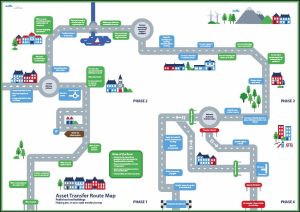
This new PDF has been developed by Community Ownership Support Service (COSS). It is used by COSS advisors to identify where you are in the process, as laid down in Part 5; Asset Transfer, in the Community Empowerment (Scotland) Act 2015. It helps to guide you through the steps along the way to achieving your goals. Side one of the poster shows the four phases of the asset transfer process and signposts each phase of the journey. Side two gives more detail and links to relevant information for each phase.
Download PDF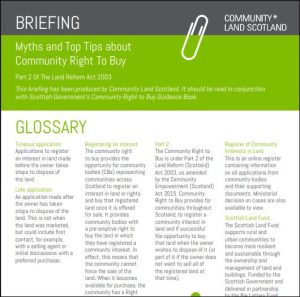
This breifing has been produced by Community Land Scotland. It should be read in conjunction with the Scottish Government’s Community Right to Buy Guidance notes.
GDPR Privacy Notice reffering to the personal details we hold on clients for Scottish Government reporting purposes and how we process this.
Download PDF
Below you will find a webinar, delivered by Sandra Macaskill of CaskieCo, who has researched and written the publication ‘Public Toilets – the real cost of spending a penny’ for the Community Ownership Support Service, this webinar will draw on the experiences from urban and rural communities, discuss the issues to be considered and highlights some of the innovative approaches being taken.
Please note – this resource was produced in 2018 and has not been updated to reflect guidance in relation to Covid-19
Sheila Hobbs, Planning Director from Scott Hobbs Planning discusses different strategies to provide solutions to problems faced throughout the planning process.
This webinar along with our guide “The Planning Journey: 10 Junctions A Town Planners Perspective” (see below) seeks to help you think creatively about how to engage in the planning process. It looks at real circumstances or possible examples which may help communities think of alternative ways to be involved in the planning process, to secure benefits through development which may not otherwise be available to them.
This guide seeks to help you think creatively about how to engage in the planning process. It looks at real circumstances or possible examples which may help communities think of alternative ways to be involved in the planning process, to secure benefits through development which may not otherwise be available to them.
In this webinar, Sheila Hobbs, Planning Director from Scott Hobbs Planning discusses different strategies to provide solutions to problems faced throughout the planning process.
Community woodlands are growing and thriving in Scotland, with over 200 communities across the country engaged in owning or managing woodlands. This fact sheet aims to highlight the steps required for communities to own and manage their own woodland.
Download PDF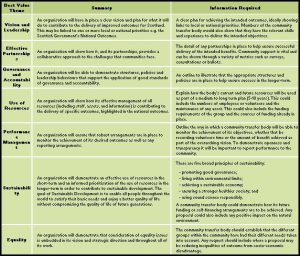
Downloadable version of the 7 government guidances to Assesing Best Value.
Download PDF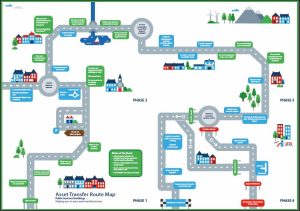
This new PDF has been developed by Community Ownership Support Service (COSS). It is used by COSS advisors to identify where you are in the process, as laid down in Part 5; Asset Transfer, in the Community Empowerment (Scotland) Act 2015. It helps to guide you through the steps along the way to achieving your goals. Side one of the poster shows the four phases of the asset transfer process and signposts each phase of the journey. Side two gives more detail and links to relevant information for each phase.
Download PDF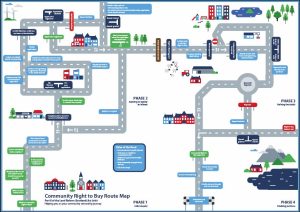
A Community Right to Buy (CRtB) is a pre-emptive right to buy land (or property) for communities throughout Scotland under Part 2 of the Land Reform (Scotland) Act 2003. It provides for those communities, who successfully register a community interest in land, to have the frst option to buy when the registered land is offered for sale.
Download PDF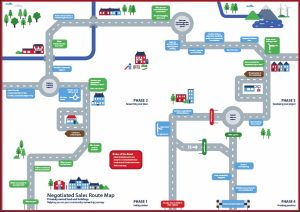
Negotiated sales of privately owned land and buildings.
Download PDF